Education
University of California, Davis
Master of Science
Computer Science
2025 - Ongoing
- GPA: 4.0
- Relevant coursework: Software Engineering, Operating Systems, Machine Learning, Artificial Intelligence
University of California, Davis
Bachelor of Science
Computer Science
2019 - 2023
- GPA: 3.6
- Relevant coursework: Operating Systems, Artificial Intelligence, Web Development, Machine Learning, Software Development, Object-Oriented Programming, Data Structures, Algorithm Design and Analysis, and Computer Architecture.
Work Experience

University of California, Davis
Graduate Student Researcher
September 2025 - Present
Davis, CA
- Co-authoring a tooling paper accepted to ISPASS 2026, advancing reproducible research workflows for computer architecture simulation.
University of California, Davis
Software Developer
August 2023 - July 2025
Davis, CA
- Contributed 200+ commits and 5,000+ lines of code to gem5, a leading computer architecture simulator with 5,500+ citations, thousands of users, and adoption by industry leaders including AMD, Arm, and Google.
- Designed and automated workflows for building disk images, workloads, and benchmark suites, now used widely by the research community.
- Drove migration of gem5 resources from Google Cloud to Microsoft Azure, reducing storage and egress costs by over 50% while improving maintainability.
- Designed and deployed serverless API endpoints on Azure Functions, for a more scalable and maintainable solution.
- Supported the gem5 community by triaging GitHub issues, answering technical questions on Slack and mailing lists, and onboarding new contributors.
Projects

NAAMSE: Neural Adversarial Agent Mutation-based Security Evaluator
November 2025 - February 2026
PythonLangChainLLMs
Collaborators: Parth Shah, Kunal Pai
- Won 2nd place for Agent Safety at the UC Berkeley RDI AgentBeats competition.
- Built the behavioral scoring engine for a security red-teaming tool that uses evolutionary algorithms to autonomously generate adversarial prompts against LLMs.
- Validated attack effectiveness by running multiple LLMs against the framework; results informed scoring rubric refinements.

HASHIRU: Hierarchical Agent System for Hybrid Intelligent Resource Utilization
March 2025 - Present
PythonLLMsMulti-Agent Systems
Collaborators: Parth Shah, Kunal Pai
- Co-built a budget-aware multi-agent orchestration framework that dynamically decomposes tasks and delegates to specialized agents, minimizing cost by reserving expensive models for tasks that require them.
- Engineered the resource estimation module, which scores agents by capability and cost so the central orchestrator can make informed routing decisions in real time.

- Built the infrastructure for gem5 Resources as a senior design project; currently serves 1.2M+ database requests and 20,000+ website visitors per month.
- Implemented advanced search and a semantic versioning + categorization system, significantly improving resource discoverability.
- Expanded gem5's database support by integrating local and remote JSON files as well as MongoDB, improving efficiency and user accessibility.
- Published as a part of ISCA 2023: gem5 Workshop.
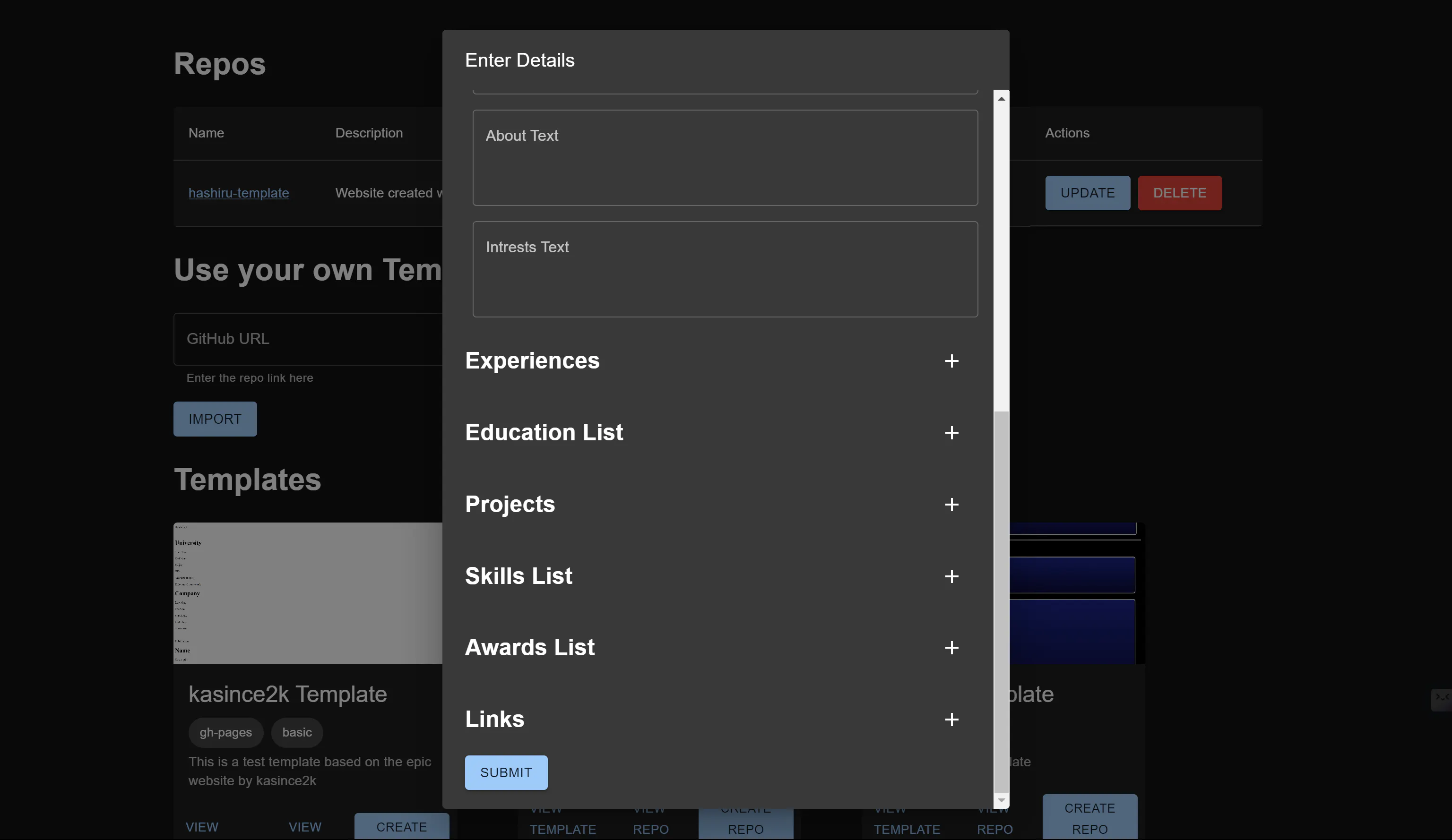
- Demonstrated strong coding and programming skills to create QuixFolio as an open-source project.
- Streamlined the portfolio creation process by providing a wide range of customizable templates and easy information input options.
- Implemented hosting capabilities on GitHub pages, enabling seamless portfolio sharing and accessibility.
- Successfully launched the alpha version of QuixFolio, which garnered significant traction with over 190 visitors and 1000+ page views within the first week.
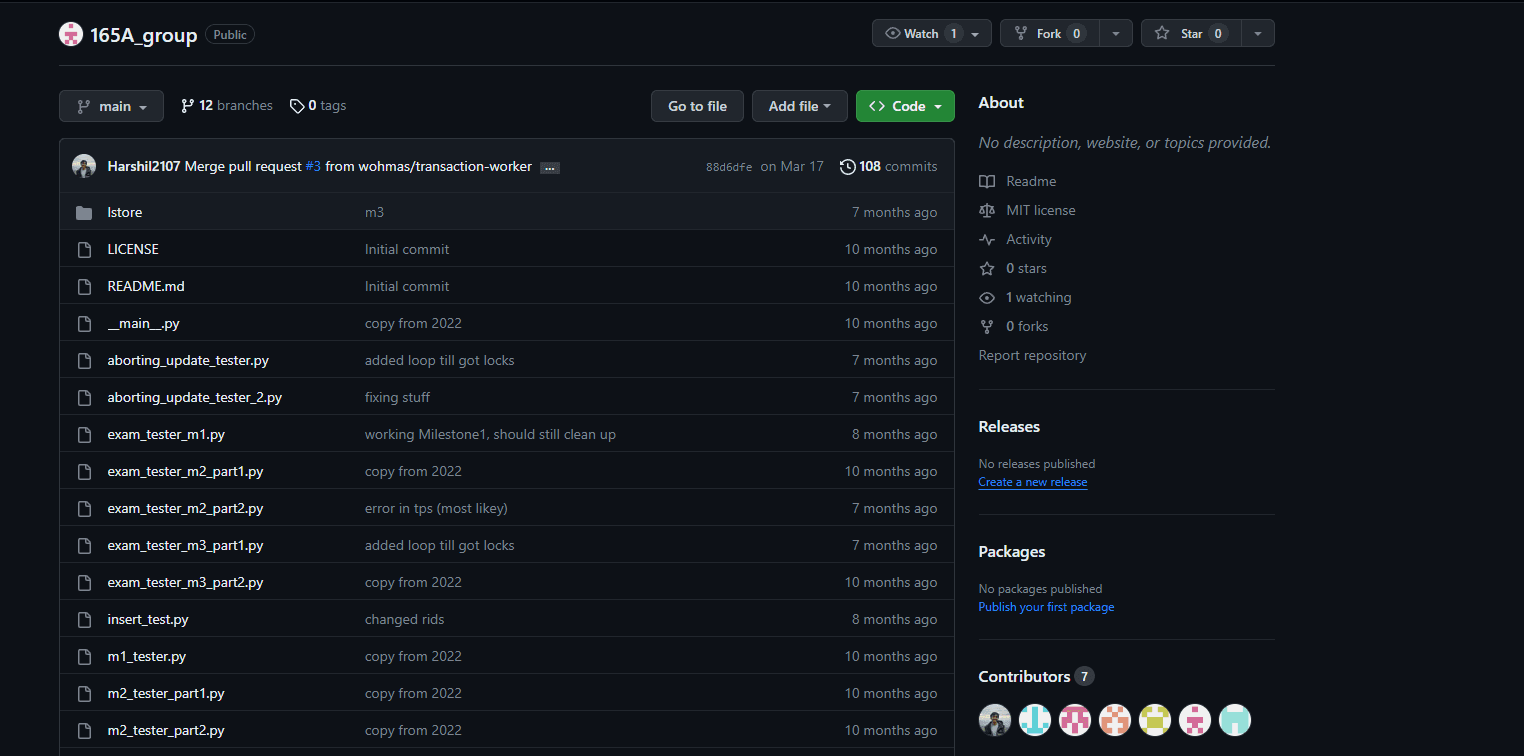
- Collaborated with team members to develop a multi-threaded Python-based L-Store database with support for essential functionalities such as search, insert, update, sum, and delete queries.
- Ensured data integrity and persistence by incorporating disk writing mechanisms, safeguarding critical information against system failures or crashes.
- Utilized a BTree data structure to efficiently index and organize data, enhancing the database's search and retrieval operations for faster response times.
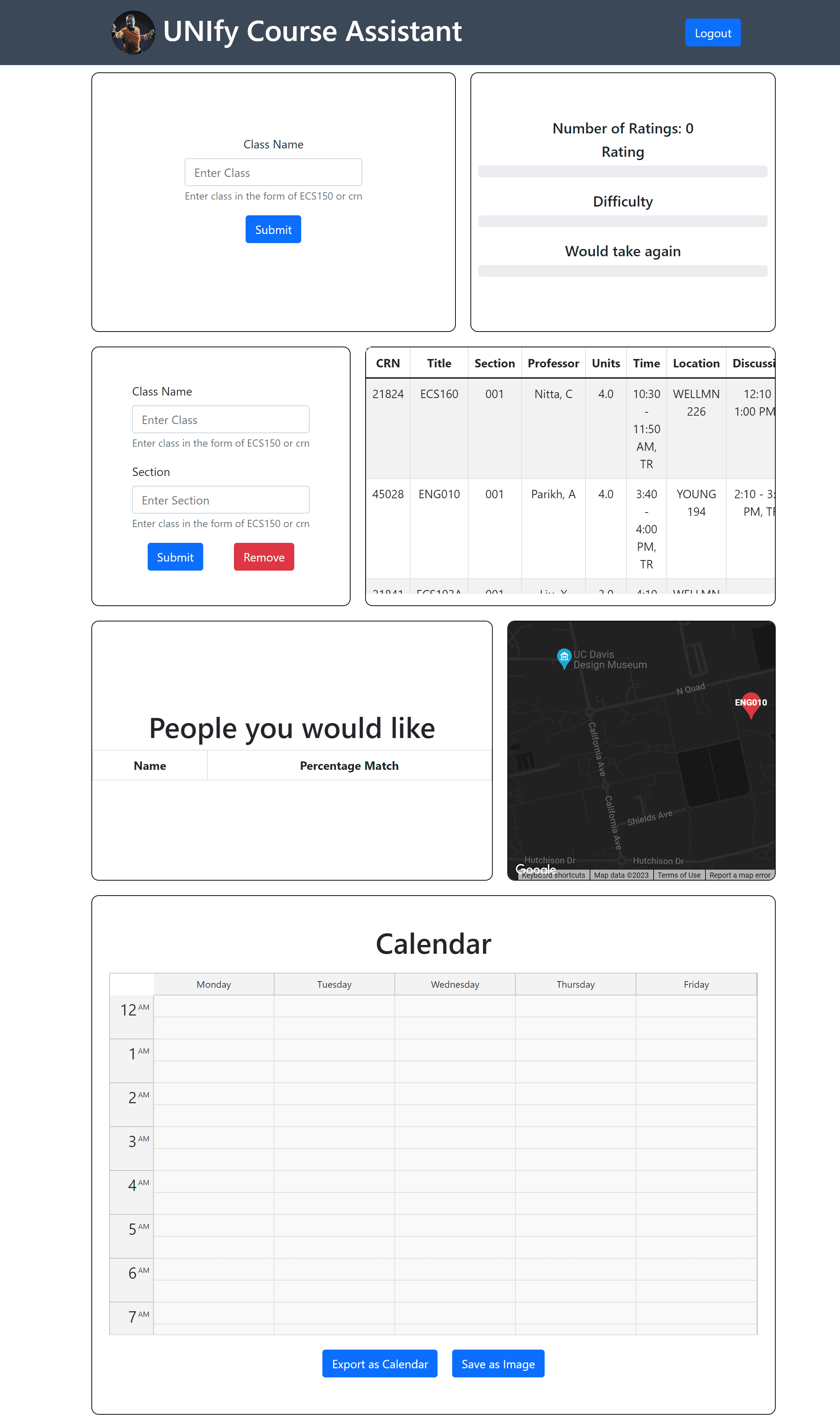
- Utilized the UC Davis Schedule Builder API to extract class timings and professors.
- Formulated a class-based hierarchized dictionary to maintain schedules of over 100 server members in five Discord servers.
- Extracted data from APIs of Rate My Professor and Google Calendar to add additional features to the bot.
- Solidified skills of good software design to understand and solve problem domain.
Publications
Reproducibility and Standardization in gem5 Resources v25.0
paper
Kunal Pai, Harshil Patel, Erin Le, Noah Krim, Mahyar Samani, Bobby R. Bruce, Jason Lowe-Power
arXiv preprint (accepted ISPASS 2026)
Reproducibility in simulation-based computer architecture research requires coordinating artifacts like disk images, kernels, and benchmarks, but existing workflows are inconsistent. We improve gem5, an open-source simulator with over 1600 forks, and gem5 Resources, a centralized repository of over 2000 pre-packaged artifacts, to address these issues. While gem5 Resources enables artifact sharing, researchers still face challenges. Creating custom disk images is complex and time-consuming, with no standardized process across ISAs, making it difficult to extend and share images. gem5 provides limited guest-host communication features through a set of predefined exit events that restrict researchers’ ability to dynamically control and monitor simulations. Lastly, running simulations with multiple workloads requires researchers to write custom external scripts to coordinate multiple gem5 simulations which creates error-prone and hard-to-reproduce workflows. To overcome this, we introduce several features in gem5 and gem5 Resources. We standardize disk-image creation across x86, ARM, and RISC-V using Packer, and provide validated base images with pre-annotated benchmark suites (NPB, GAPBS). We provide 12 new disk images, 6 new kernels, and over 200 workloads across three ISAs. We refactor the exit event system to a class-based model and introduce hypercalls for enhanced guest-host communication that allows researchers to define custom behavior for their exit events. We also provide a utility to remotely monitor simulations and the gem5-bridge driver for user-space m5 operations. Additionally, we implemented Suites and MultiSim to enable parallel full-system simulations from gem5 configuration scripts, eliminating the need for external scripting. These features reduce setup complexity and provide extensible, validated resources that improve reproducibility and standardization.
Computer ArchitectureSimulation
NAAMSE: Framework for Evolutionary Security Evaluation of Agents
preprint
Kunal Pai, Parth Shah, Harshil Patel
arXiv preprint
AI agents are increasingly deployed in production, yet their security evaluations remain bottlenecked by manual red-teaming or static benchmarks that fail to model adaptive, multi-turn adversaries. We propose NAAMSE, an evolutionary framework that reframes agent security evaluation as a feedback-driven optimization problem. Our system employs a single autonomous agent that orchestrates a lifecycle of genetic prompt mutation, hierarchical corpus exploration, and asymmetric behavioral scoring. By using model responses as a fitness signal, the framework iteratively compounds effective attack strategies while simultaneously ensuring "benign-use correctness", preventing the degenerate security of blanket refusal. Our experiments on Gemini 2.5 Flash demonstrate that evolutionary mutation systematically amplifies vulnerabilities missed by one-shot methods, with controlled ablations revealing that the synergy between exploration and targeted mutation uncovers high-severity failure modes. We show that this adaptive approach provides a more realistic and scalable assessment of agent robustness in the face of evolving threats.
Artificial IntelligenceMultiagent SystemsSecurity
HASHIRU: Hierarchical Agent System for Hybrid Intelligent Resource Utilization
preprint
Kunal Pai, Parth Shah, Harshil Patel
arXiv preprint
To support resource-efficient multi-agent reasoning, we introduce HASHIRU, a hierarchical agent system that dynamically instantiates specialized agents under cost and memory constraints. HASHIRU combines hybrid LLM usage, autonomous API/tool creation, and a novel economic model for agent hiring/firing, outperforming larger models like Gemini 2.0 Flash on complex reasoning and safety tasks.
Artificial IntelligenceLarge Language Models (LLMs)Multi-Agent Systems
gem5 Vision
poster
Parth Shah, Kunal Pai, Harshil Patel, Arslan Ali
ISCA 2023: gem5 Workshop
The gem5 Vision Project seeks to improve user-friendliness and accessibility by introducing advanced search functionality, comprehensive resource categorization, and expanded database support within the gem5 ecosystem for researchers and developers.
Computer Architecture
Awards
UC Berkeley RDI AgentBeats Competition
2nd Place for Agent Safety
February 2026HackDavis
Best use of GitHub
Winter 2023